Explore the world of high-quality Guillemin fittings
, also known as French Guillemin couplings. Qruck delivers durable, reliable solutions for industrial fluid transfer applications worldwide.
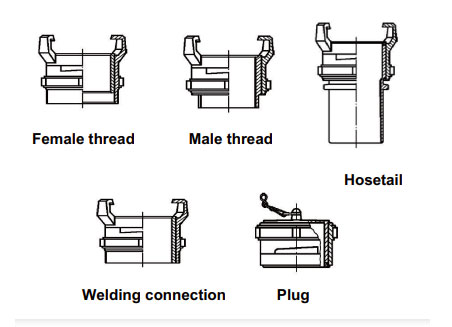
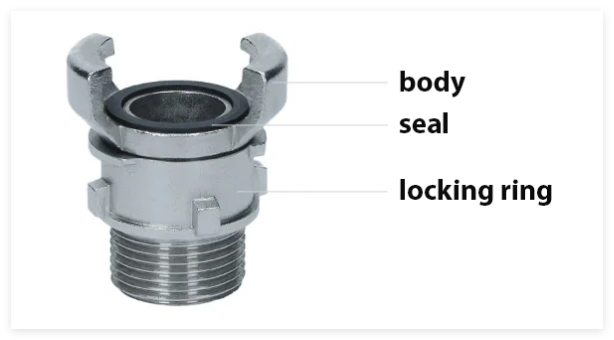
Guillemin fittings, commonly referred to as Guillemin couplings or French Guillemin links, are symmetrical quick-connect coupling systems widely used in industrial fittings applications. Both halves of the coupling are identical, making them versatile and easy to use in demanding environments
Originating as the French standard for tank connections and fluid transfer, these industrial fittings excel in both pumping and suction operations for liquids, viscous fluids, powders, and granules. Qruck specializes in manufacturing top-tier Guillemin fittings in stainless steel, aluminum, and other high-performance materials to meet global standards like EN 14420-8 and NF E 29-572.
The microstructure advantages translate directly into tangible performance benefits for fire fittings. The following table summarizes these impacts:
| Property | Impact of Forging | Benefit to fire fittings |
|---|---|---|
| Strength & Durability | Significantly increased; mechanical properties can be ~30% higher than cast alloys. | Higher load capacity and greater resistance to bending or cracking under high stress, ideal for performance driving. |
| Weight | Reduced; forged fire fittings are approximately 20% lighter than cast fire fittings of equivalent size . | Lower unsprung mass, leading to faster acceleration, shorter braking distances. |
| Fatigue Life | Substantially improved due to the absence of crack-initiating pores. | Longer-lasting fire fittings that can better withstand the repetitive stresses of driving, including vibrations and road impacts. |
| Ductility | Enhanced; the refined, uniform grain structure allows for greater elongation before fracture. | Less brittle than cast fire fittings, allowing them to absorb impacts without catastrophic failure. Elongation of up to 10% has been reported. |
| Thermal Performance | Improved heat dissipation due to the dense, forged structure. | More effective cooling of brake system components, reducing brake fade during aggressive driving. |
In summary, the forging process enhances Aluminum fire fittings by fundamentally transforming the metal's internal architecture. By refining the grain structure and eliminating the microscopic voids inherent to casting, forging creates a component that is simultaneously stronger, lighter, and more durable.
The key impacts are a fire hose coupling with superior strength-to-weight ratio, exceptional fatigue resistance, and enhanced ductility. While forged fire hose couplings carry a higher manufacturing cost, the significant improvements in performance, safety, and longevity make them the superior choice for High Flow or High Pressure fire equipments, fire department connections, fire hose couplings and other fire fittings
| Property / Aspect | ACD12 (High Pressure Casting) | A356 (Low Pressure Casting) | 6061-T6 (Forging) |
|---|---|---|---|
| Typical tensile strength | ~230–320 MPa | ~240–310 MPa (after T6) | ~310 MPa (min), typical ~310–345 MPa |
| Yield strength (0.2%) | ~160–220 MPa | ~160–220 MPa (after T6) | ~270–280 MPa |
| Elongation (ductility) | Low: ~1–3% | Moderate: ~5–10% (after T6) | High: ~10–17% |
| Hardness (HB) | ~80–95 HB | ~70–90 HB (after T6) | ~95–105 HB |
| Porosity | Higher (gas or shrinkage porosity common) | Low (controlled filling, less turbulence) | Almost none (wrought structure) |
| Density / internal integrity | Less dense (micro-porosity present) | Near-dense, better than HPDC | Fully dense, no porosity |
| Pressure tightness | Moderate (may leak under high pressure) | Good (suitable for hydraulic/pneumatic) | Excellent (best for high-pressure fluid systems) |
| Machining | Fair (can be abrasive; porosity may cause tool wear) | Good (consistent material) | Excellent (uniform grain structure) |
| Heat treatment possible | Limited (can cause blistering due to trapped gas) | Yes (T6 improves strength & ductility) | Yes (T6 is standard) |
| Cost (tooling & unit) | High tooling, low unit cost (mass production) | Medium tooling, medium unit cost | Low to medium tooling (if simple shapes), higher unit cost |
| Advantages summary | Fast production, complex shapes, good surface finish | Good ductility, pressure tight, heat treatable | Highest strength & ductility, no porosity, excellent fatigue & impact resistance |
We need to carefully choose production processes based on the requirements of different fire-fighting equipment. Especially when the working environment is extremely harsh or the work pressure is relatively high, we should prioritize aluminum forging production technology.
Qruck provides technical support for customers in type choice, product design, production, assembly, maintenance, and sales. Reliable fire fittings are critical for fire department connection. Understanding which fitting is appropriate for the job is the first step in selecting the correct fire hose connectors and adapters. Our fittings work better in different applications. Just please contact us to determine which connector is best for your specific application.
There are different aluminum casting processes for fire equipments, fire department connections , fire hose couplings and other fire fittings. The strength, wear resistance, and service life of fire fittings produced in different aluminum production processes are different. It may even affect the connection safety of the fire equipments. Obviously, aluminum forging is the best choice.
Let' check the Influence of Forging on the Performance Enhancement of Aluminum fire fittings:
Forging is a manufacturing process that shapes metal using localized compressive forces. In the context of aluminum alloy fire fittings, forging represents a significant upgrade over traditional casting methods. By applying high pressure to a solid aluminum billet, the forging process fundamentally alters the material's internal structure, leading to a dramatic enhancement in mechanical performance. This report briefly analyzes how forging improves aluminum fire fittings and summarizes the key impacts on material properties.
The microstructure advantages translate directly into tangible performance benefits for fire fittings. The following table summarizes these impacts:
| Property | Impact of Forging | Benefit to fire fittings |
|---|---|---|
| Strength & Durability | Significantly increased; mechanical properties can be ~30% higher than cast alloys. | Higher load capacity and greater resistance to bending or cracking under high stress, ideal for performance driving. |
| Weight | Reduced; forged fire fittings are approximately 20% lighter than cast fire fittings of equivalent size . | Lower unsprung mass, leading to faster acceleration, shorter braking distances. |
| Fatigue Life | Substantially improved due to the absence of crack-initiating pores. | Longer-lasting fire fittings that can better withstand the repetitive stresses of driving, including vibrations and road impacts. |
| Ductility | Enhanced; the refined, uniform grain structure allows for greater elongation before fracture. | Less brittle than cast fire fittings, allowing them to absorb impacts without catastrophic failure. Elongation of up to 10% has been reported. |
| Thermal Performance | Improved heat dissipation due to the dense, forged structure. | More effective cooling of brake system components, reducing brake fade during aggressive driving. |
In summary, the forging process enhances Aluminum fire fittings by fundamentally transforming the metal's internal architecture. By refining the grain structure and eliminating the microscopic voids inherent to casting, forging creates a component that is simultaneously stronger, lighter, and more durable.
The key impacts are a fire hose coupling with superior strength-to-weight ratio, exceptional fatigue resistance, and enhanced ductility. While forged fire hose couplings carry a higher manufacturing cost, the significant improvements in performance, safety, and longevity make them the superior choice for High Flow or High Pressure fire equipments, fire department connections, fire hose couplings and other fire fittings
| Property / Aspect | ACD12 (High Pressure Casting) | A356 (Low Pressure Casting) | 6061-T6 (Forging) |
|---|---|---|---|
| Typical tensile strength | ~230–320 MPa | ~240–310 MPa (after T6) | ~310 MPa (min), typical ~310–345 MPa |
| Yield strength (0.2%) | ~160–220 MPa | ~160–220 MPa (after T6) | ~270–280 MPa |
| Elongation (ductility) | Low: ~1–3% | Moderate: ~5–10% (after T6) | High: ~10–17% |
| Hardness (HB) | ~80–95 HB | ~70–90 HB (after T6) | ~95–105 HB |
| Porosity | Higher (gas or shrinkage porosity common) | Low (controlled filling, less turbulence) | Almost none (wrought structure) |
| Density / internal integrity | Less dense (micro-porosity present) | Near-dense, better than HPDC | Fully dense, no porosity |
| Pressure tightness | Moderate (may leak under high pressure) | Good (suitable for hydraulic/pneumatic) | Excellent (best for high-pressure fluid systems) |
| Machining | Fair (can be abrasive; porosity may cause tool wear) | Good (consistent material) | Excellent (uniform grain structure) |
| Heat treatment possible | Limited (can cause blistering due to trapped gas) | Yes (T6 improves strength & ductility) | Yes (T6 is standard) |
| Cost (tooling & unit) | High tooling, low unit cost (mass production) | Medium tooling, medium unit cost | Low to medium tooling (if simple shapes), higher unit cost |
| Advantages summary | Fast production, complex shapes, good surface finish | Good ductility, pressure tight, heat treatable | Highest strength & ductility, no porosity, excellent fatigue & impact resistance |
We need to carefully choose production processes based on the requirements of different fire-fighting equipment. Especially when the working environment is extremely harsh or the work pressure is relatively high, we should prioritize aluminum forging production technology.
Qruck provides technical support for customers in type choice, product design, production, assembly, maintenance, and sales. Reliable fire fittings are critical for fire department connection. Understanding which fitting is appropriate for the job is the first step in selecting the correct fire hose connectors and adapters. Our fittings work better in different applications. Just please contact us to determine which connector is best for your specific application.
Copyright © 2025 Qruck All Rights Reserved. Designed & SEO by followala.cn Sitemap | XML
Friendship Cooperation - Kraup® Pump: Submersible Drainage Pump | Slurry Pump | High Head Dewatering Pump