When selecting manufacturing components for emergency response, choosing the right production methodology is paramount. There are various aluminum casting processes for fire equipments, fire department connections, critical fire hose couplings , and other essential fire fittings. The ultimate material strength, wear resistance, structural integrity, and overall service life of these fittings vary significantly based on the chosen aluminum production process. Utilizing an sub-optimal manufacturing technique can drastically compromise connection safety and lead to catastrophic failures of vital fire equipments in high-pressure environments.
To ensure maximum safety and reliable deployment during firefighting operations, it is necessary to thoroughly understand the pros and cons of different aluminum metalworking and molding methodologies.
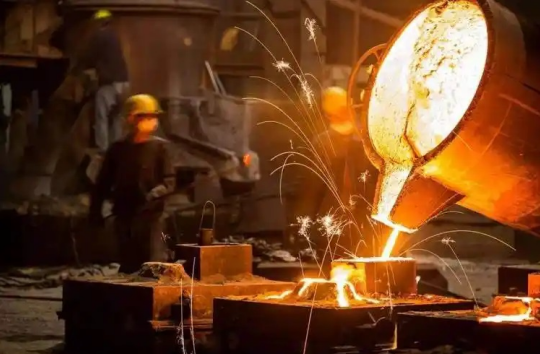
Aluminum gravity casting involves pouring molten metal into a mold utilizing only the force of Earth's gravity. This traditional method is commonly explored in the initial phases of product design.
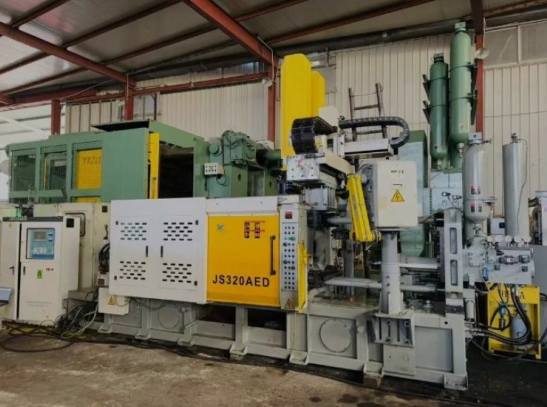
High-Pressure Die Casting (HPDC) forces molten aluminum into a steel mold cavity under extreme, high-velocity pressure conditions.
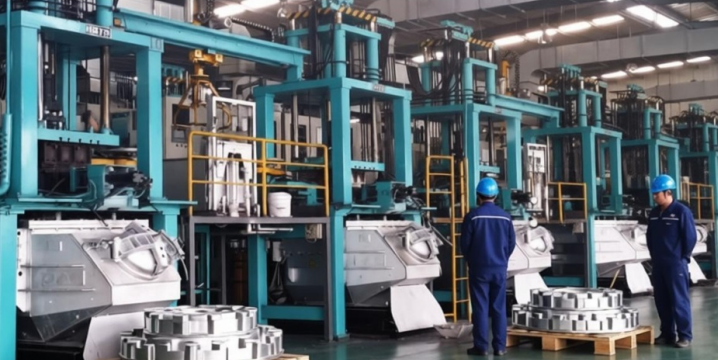
Low-pressure casting uses a controlled, low-pressure gas to push molten metal from a lower holding furnace upward into the mold cavity, ensuring a smooth and progressive filling process.
Qruck Strategic Focus: At Qruck, we put a clear and dedicated focus on advanced production using the low-pressure casting for fire equipments . Following this meticulous casting process, we always arrange precision CNC machining for all the critical connecting dimensions. This extra layer of control guarantees flawlessly smooth fitting work and precise thread mating in real-world scenarios.
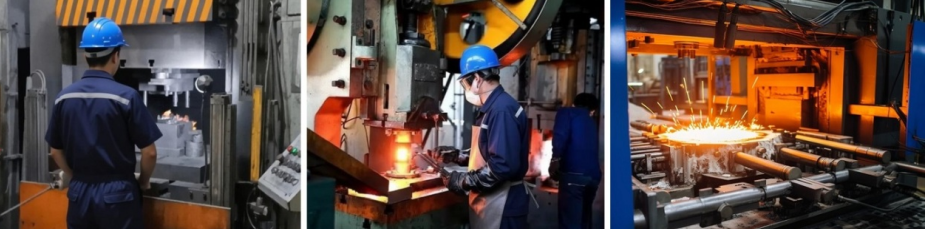
Forging subjects solid or pre-formed aluminum alloys to localized compressive forces under immense tonnage, realigning the grain flow structure of the metal along the contours of the part.
Qruck Strategic Focus: At Qruck, we also place a major focus on production via the high-strength aluminum forged fire couplings process. After completing our high-precision heavy forging process, we always arrange specialized CNC machining for all connecting dimensions, which ensures perfectly smooth fitting work and airtight structural sealing under pressure.
| Property / Aspect | ACD12 (High Pressure Casting) | A356 (Low Pressure Casting) | 6061-T6 (Forging) |
| Typical tensile strength | ~230–320 MPa | ~240–310 MPa (after T6) | ~310 MPa (min), typical ~310–345 MPa |
| Yield strength (0.2%) | ~160–220 MPa | ~160–220 MPa (after T6) | ~270–280 MPa |
| Elongation (ductility) | Low: ~1–3% | Moderate: ~5–10% (after T6) | High: ~10–17% |
| Hardness (HB) | ~80–95 HB | ~70–90 HB (after T6) | ~95–105 HB |
| Porosity | Higher (gas or shrinkage porosity common) | Low (controlled filling, less turbulence) | Almost none (wrought structure) |
| Density / internal integrity | Less dense (micro-porosity present) | Near-dense, better than HPDC | Fully dense, no porosity |
| Pressure tightness | Moderate (may leak under high pressure) | Good (suitable for hydraulic/pneumatic) | Excellent (best for high-pressure fluid systems) |
| Machining | Fair (can be abrasive; porosity may cause tool wear) | Good (consistent material) | Excellent (uniform grain structure) |
| Heat treatment possible | Limited (can cause blistering due to trapped gas) | Yes (T6 improves strength & ductility) | Yes (T6 is standard) |
| Cost (tooling & unit) | High tooling, low unit cost (mass production) | Medium tooling, medium unit cost | Low to medium tooling (if simple shapes), higher unit cost |
| Advantages summary | Fast production, complex shapes, good surface finish | Good ductility, pressure tight, heat treatable | Highest strength & ductility, no porosity, excellent fatigue & impact resistance |
Selecting the ideal process requires balancing volume, budgetary constraints, and performance requirements:
Engineering teams must carefully choose production processes based on the specialized requirements of individual fire-fighting equipment. Especially when the working environment is extremely harsh or the operational work pressure is relatively high, we must prioritize advanced aluminum forging production technology to manufacture premium durable aluminum fire department connections.
Qruck provides extensive technical support for customers across every stage, including type choice, product design, production, custom assembly, long-term maintenance, and international sales. Reliable fire fittings are critical for creating safe, leak-proof fire department connections during critical rescue situations.
Understanding which specific fitting is appropriate for the exact job is the first step in selecting correct fire hose couplings, connectors, and adapters. As a dedicated heavy-duty aluminum fire fittings manufacturing specialist and a premium custom fire hose adapters supplier, our robust fittings perform better across a vast spectrum of municipal and industrial applications. Please feel free to contact the engineering team at Qruck today to determine exactly which connector or adapter is best for your specific fire safety application.
Q1: Why is porosity such a critical issue in aluminum casting processes for fire equipments?
A1: Porosity creates microscopic voids or gas pockets inside the metal. Under intense water pressure, these voids act as stress concentrators, which can lead to sudden cracking or structural failure of fire fittings. Processes like heavy forging and low-pressure casting significantly reduce or eliminate porosity, ensuring safe operation.
Q2: How does Qruck ensure the accuracy of threads on fire hose couplings?
A2: To guarantee seamless deployment, Qruck deploys high-precision precision CNC machined fire hose connectors. Whether the raw component is produced via low-pressure casting or heavy forging, all connecting dimensions and thread boundaries undergo secondary CNC machining to guarantee smooth fitting work.
Q3: Can high-pressure die cast (HPDC) parts be heat-treated for higher strength?
A3: Generally, no. High-pressure die casting tends to trap air inside the metal matrix. If you subject these components to high-temperature heat treatments, the trapped gases expand, causing surface blistering and structural warping. For heat-treatable components, Qruck recommends low-pressure casting or heavy forging.

Copyright © 2025 Qruck All Rights Reserved. Designed & SEO by followala.cn Sitemap | XML
VIC Grooved Coupling Friendship Cooperation - Submersible Drainage Pump | Slurry Pump | High Head Dewatering Pump | Encapsulated Motor | Water Cooled Motor |
 Languages