 Languages
Engineering Role of Fire Hose Couplings in Industrial Safety Systems
Fire hose couplings and fire fittings are essential components in high-pressure fire protection systems, responsible for maintaining secure and leak-free fluid transmission during emergency operations. These components are widely used in industrial plants, marine firefighting systems, oil & gas facilities, and municipal fire networks.
In real engineering conditions, fire fittings are exposed to:
- Sudden hydraulic pressure surges during activation
- Long-term vibration and cyclic mechanical stress
- Corrosive environments (saltwater, chemicals, humidity)
- High temperature fluctuations in emergency conditions
Because of these conditions, failure is rarely caused by design geometry, but by internal material defects such as porosity, inclusions, and grain discontinuity.
Industrial Fire Hose Coupling Products
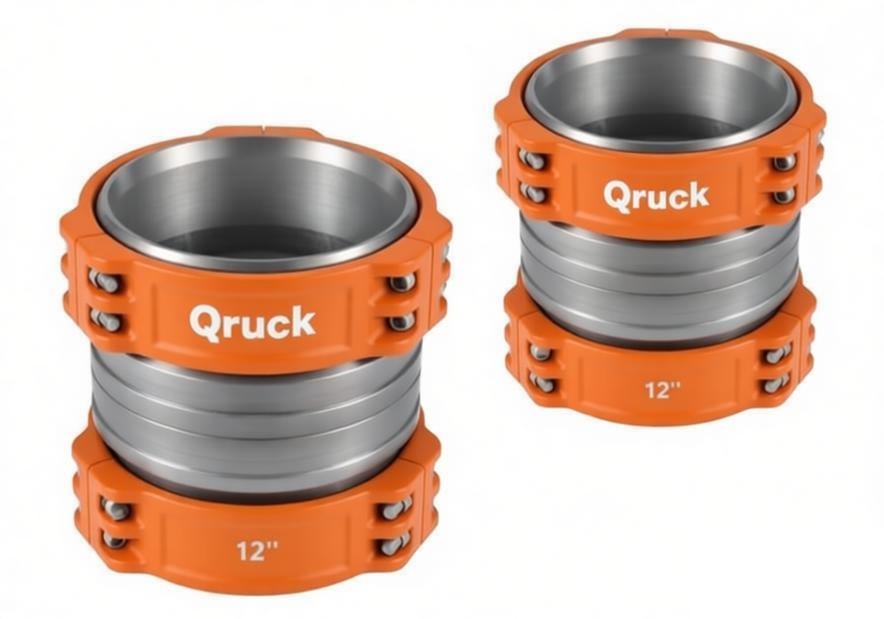
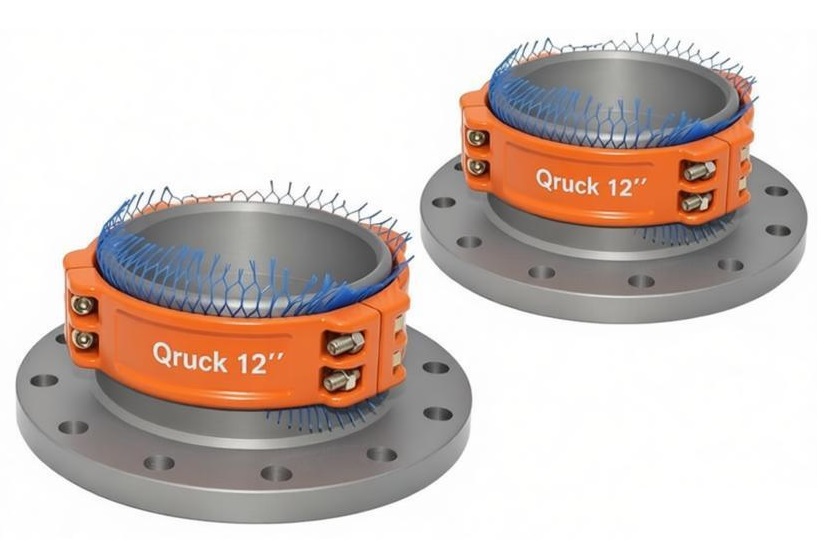
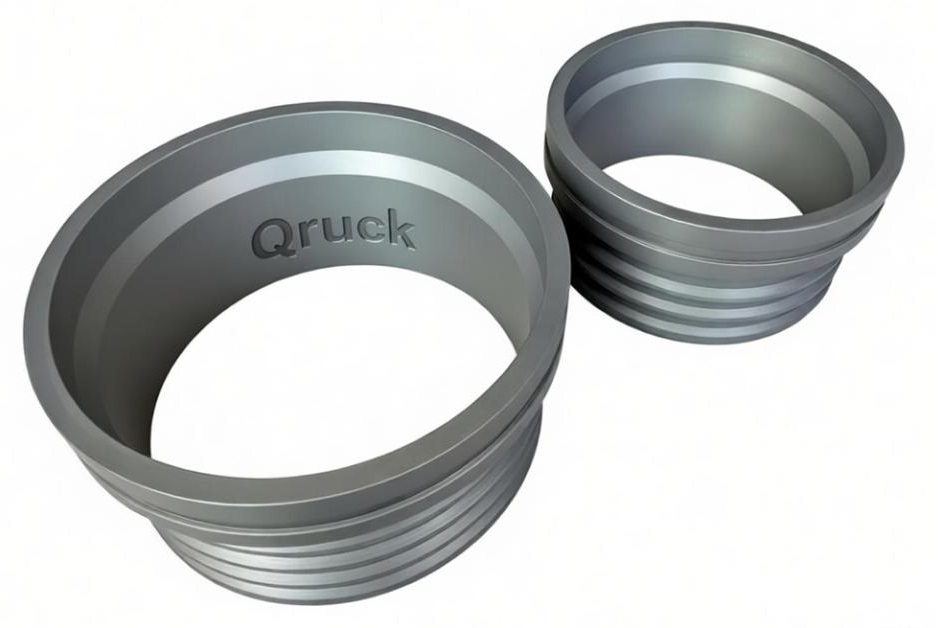
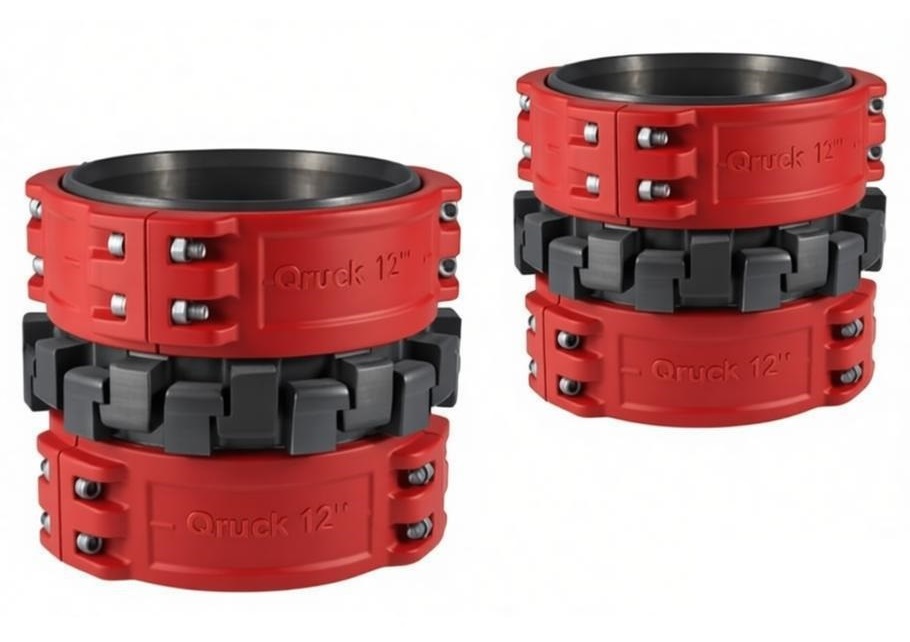
Qruck provides a full range of standard and custom fire hose couplings, including Storz couplings , NH/NST couplings, grooved hose couplings and global standard fittings , all manufactured with precision forging technology.
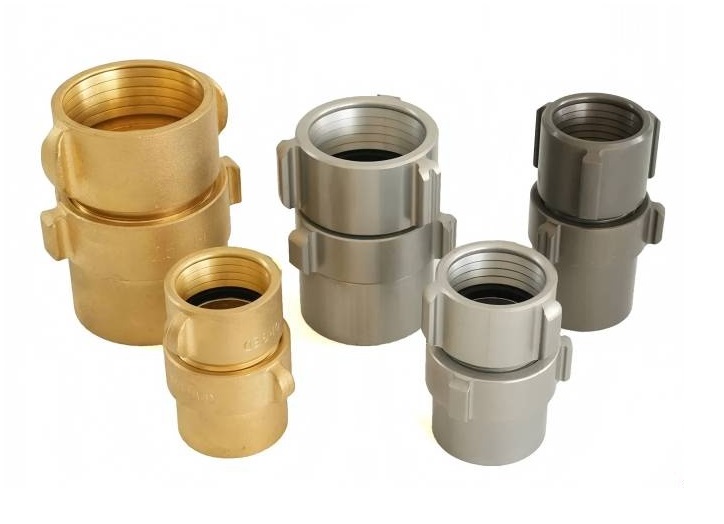
Microstructure Engineering of Forged Fire Fittings
Forging fundamentally alters the internal structure of aluminum alloys by applying controlled compressive deformation, resulting in improved grain alignment and elimination of structural defects.
Grain Flow Optimization
Forging creates continuous grain flow paths that follow the geometry of the component, significantly improving load distribution efficiency under high water pressure.
Porosity Elimination Mechanism
Internal voids formed during casting are compressed and eliminated under forging pressure, resulting in a fully dense metallic structure that ensures zero leakage under working pressure.
Fatigue Crack Resistance
The absence of internal defects reduces crack initiation points, significantly extending fatigue life under cyclic pressure loading and frequent connection operations.
Manufacturing & Application
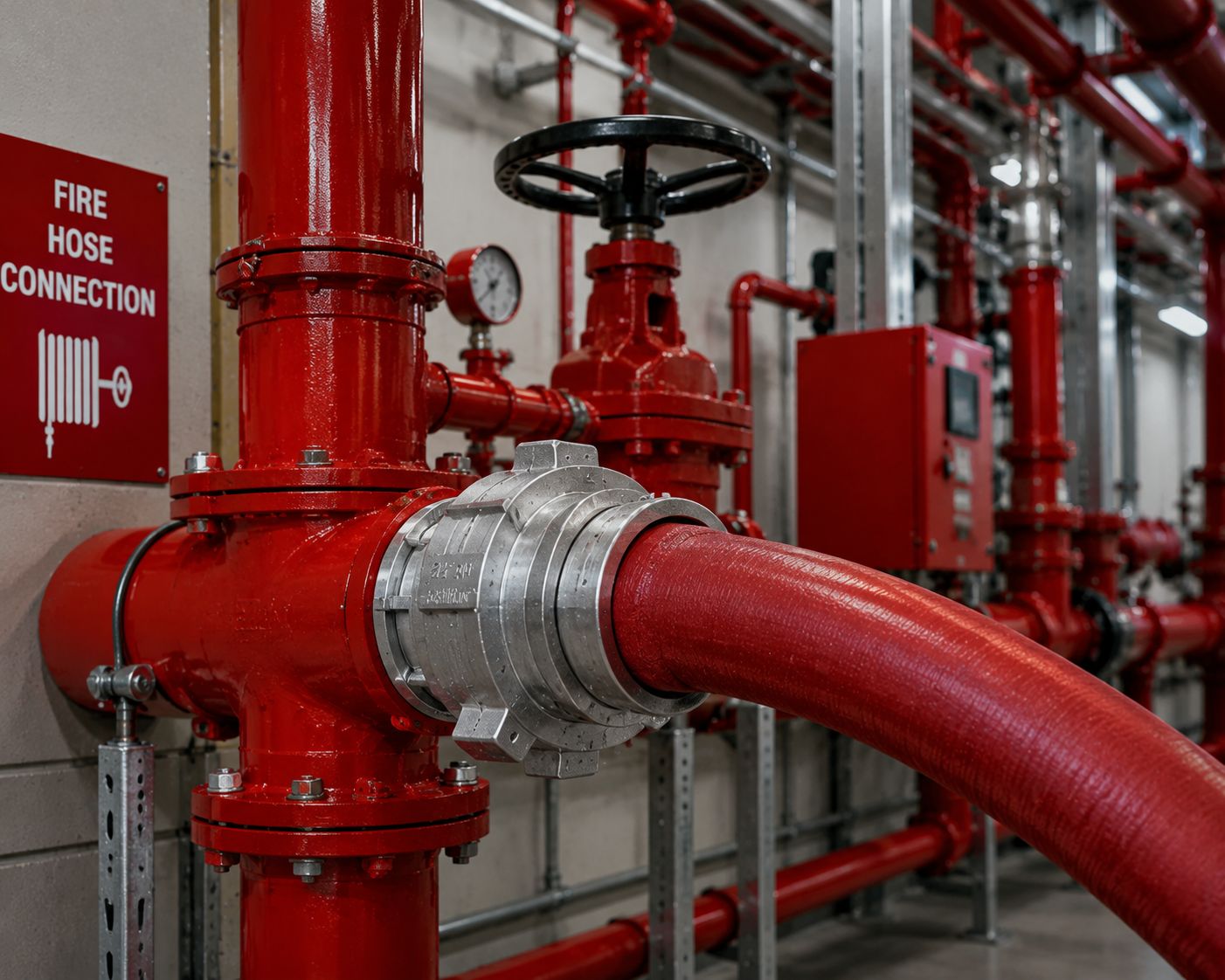
Industrial Fire Protection System Installation
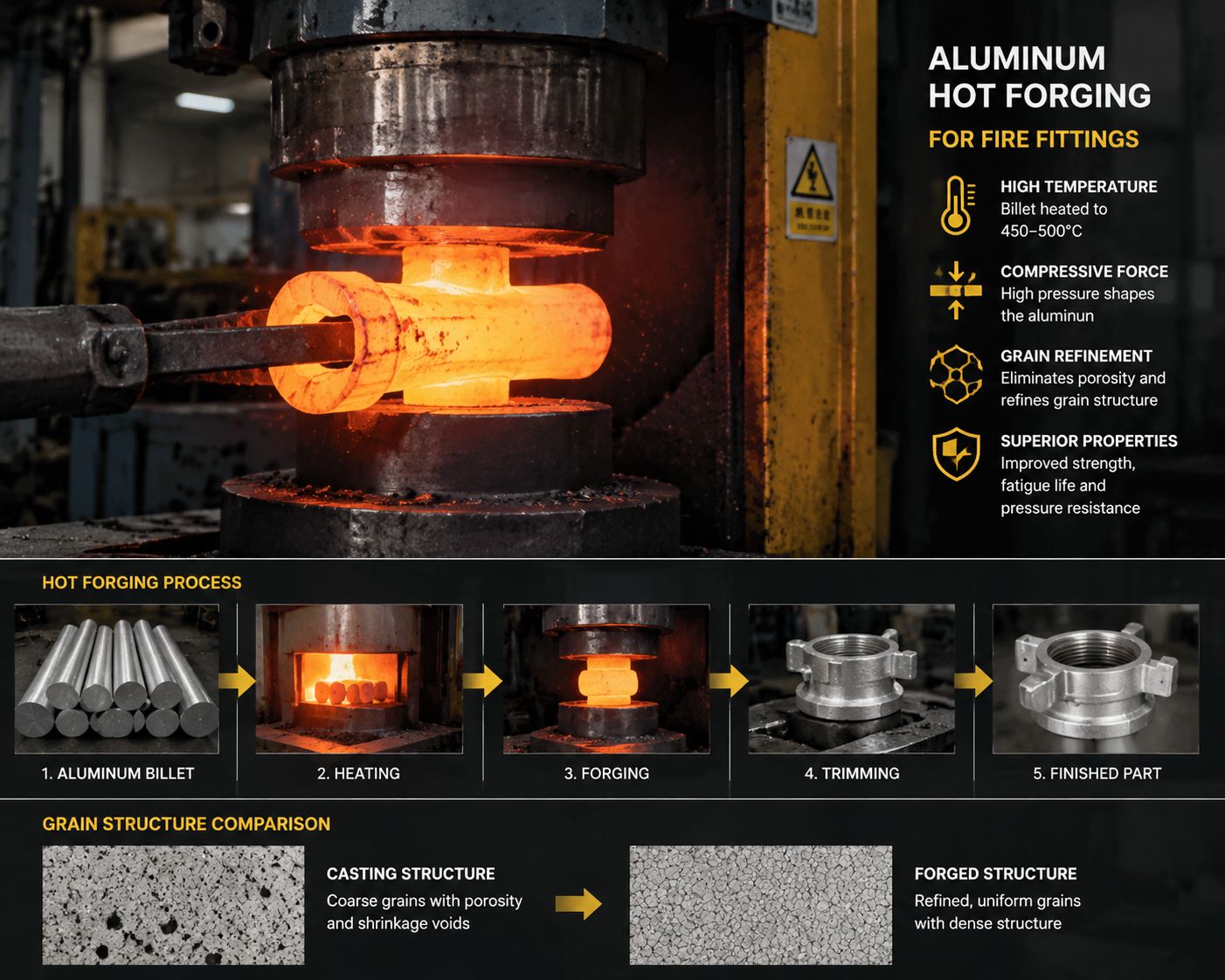
Precision Hot Forging Production
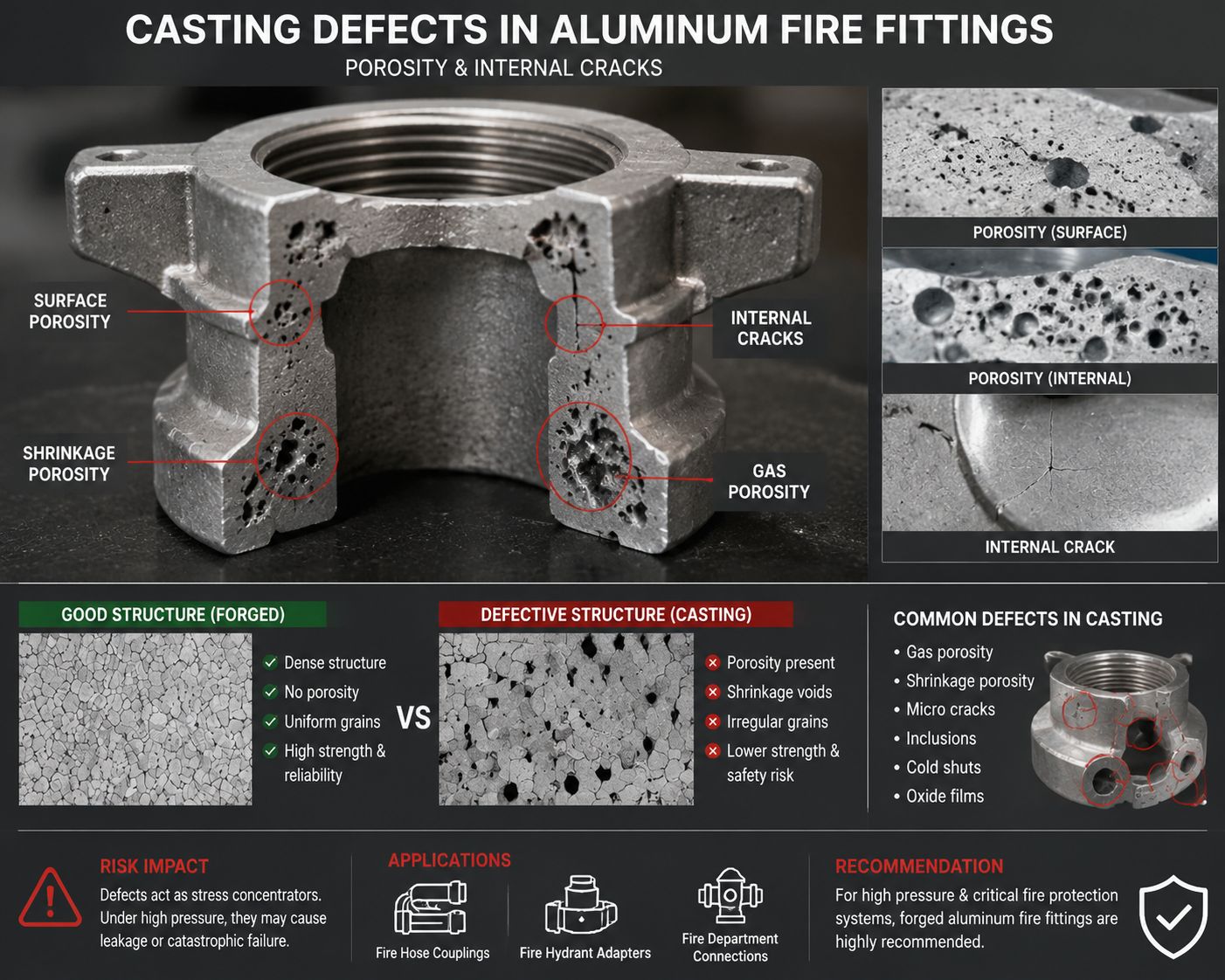
Casting Defect vs Forged Dense Structure
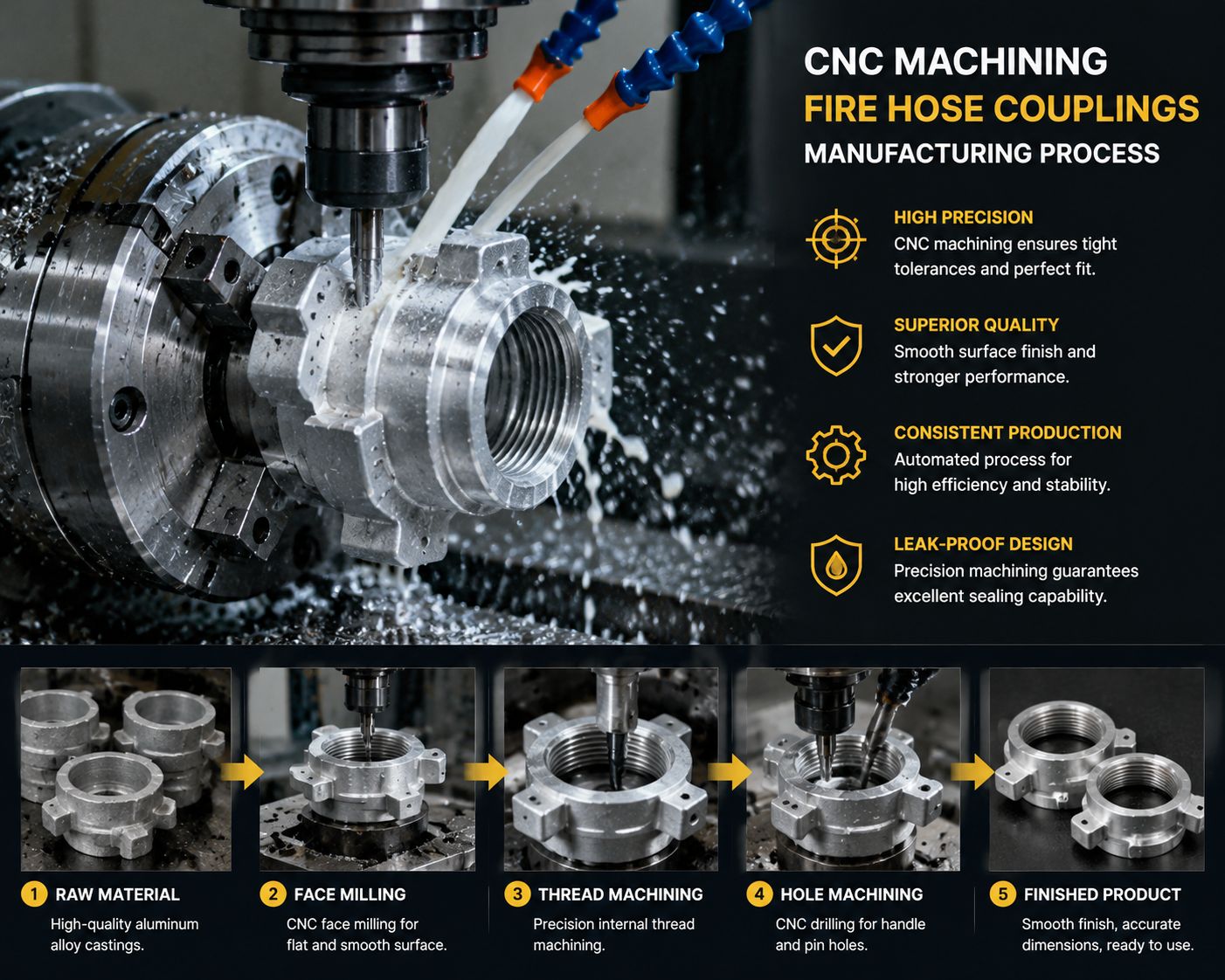
CNC Precision Machining Process
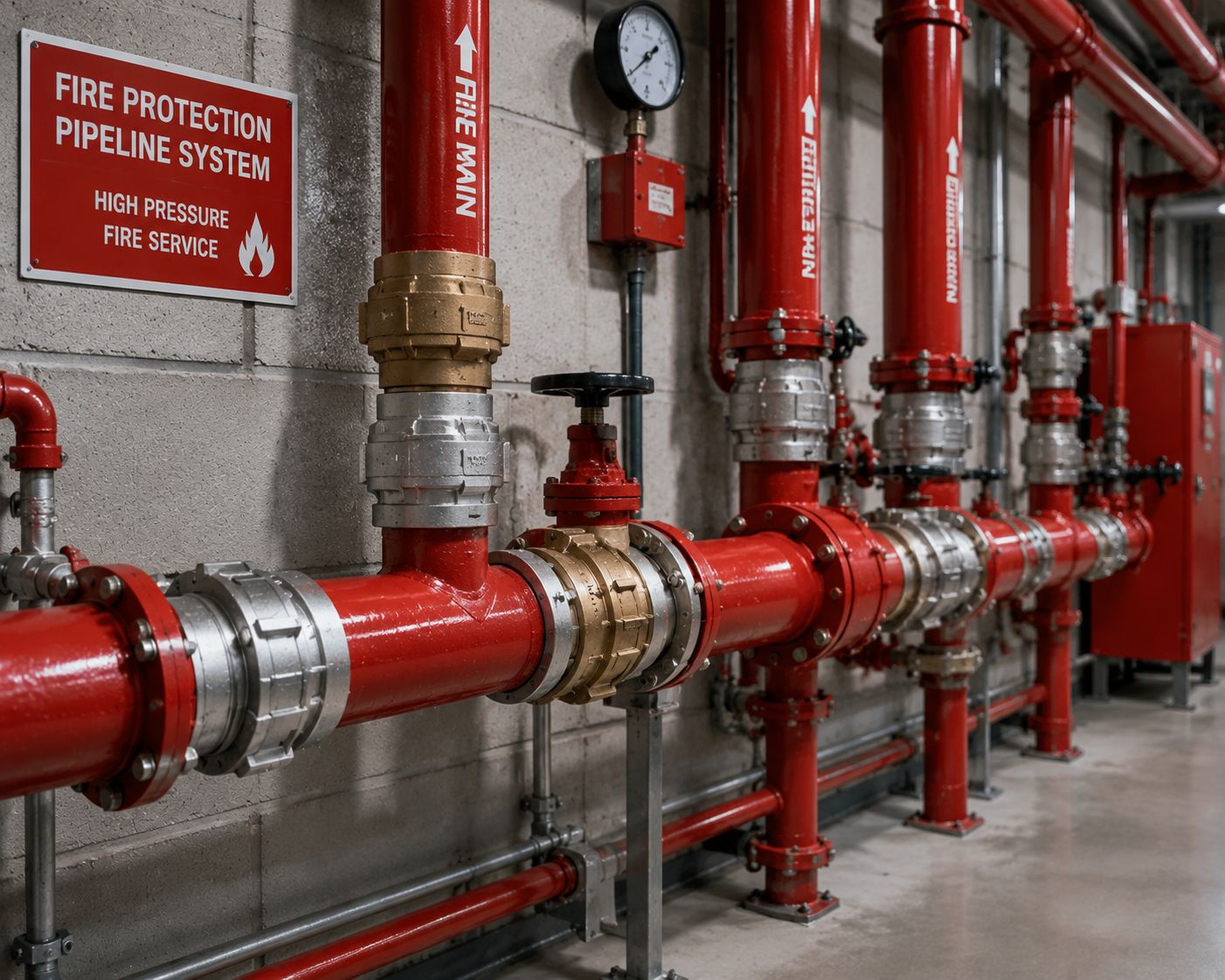
Industrial Pipeline Firefighting Application
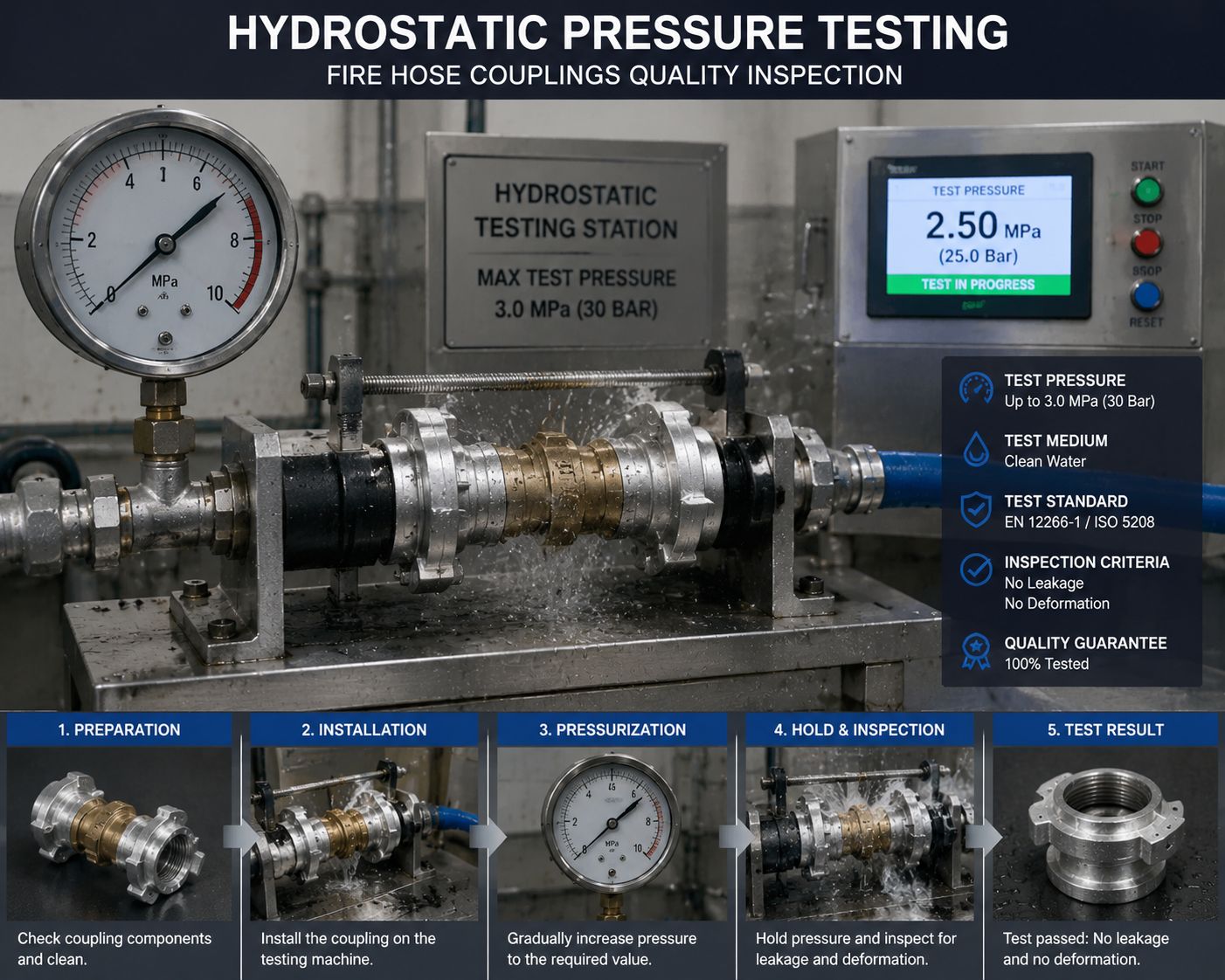
Hydrostatic Pressure Quality Test
Fire Hose Coupling Application Engineering
Fire fittings operate in mission-critical environments where failure is not acceptable. System performance depends on sealing stability, fatigue resistance, and pressure endurance.
| Property / Aspect | ACD12 (High Pressure Casting) | A356 (Low Pressure Casting) | 6061-T6 (Forging) |
|---|---|---|---|
| Typical tensile strength | ~230–320 MPa | ~240–310 MPa (after T6) | ~310 MPa (min), typical ~310–345 MPa |
| Yield strength (0.2%) | ~160–220 MPa | ~160–220 MPa (after T6) | ~270–280 MPa |
| Elongation (ductility) | Low: ~1–3% | Moderate: ~5–10% (after T6) | High: ~10–17% |
| Hardness (HB) | ~80–95 HB | ~70–90 HB (after T6) | ~95–105 HB |
| Porosity | Higher (gas or shrinkage porosity common) | Low (controlled filling, less turbulence) | Almost none (wrought structure) |
| Density / internal integrity | Less dense (micro-porosity present) | Near-dense, better than HPDC | Fully dense, no porosity |
| Pressure tightness | Moderate (may leak under high pressure) | Good (suitable for hydraulic/pneumatic) | Excellent (best for high-pressure fluid systems) |
| Machining | Fair (can be abrasive; porosity may cause tool wear) | Good (consistent material) | Excellent (uniform grain structure) |
| Heat treatment possible | Limited (can cause blistering due to trapped gas) | Yes (T6 improves strength & ductility) | Yes (T6 is standard) |
| Cost (tooling & unit) | High tooling, low unit cost (mass production) | Medium tooling, medium unit cost | Low to medium tooling (if simple shapes), higher unit cost |
| Advantages summary | Fast production, complex shapes, good surface finish | Good ductility, pressure tight, heat treatable | Highest strength & ductility, no porosity, excellent fatigue & impact resistance |
Forging Impact on Fire Fittings – Engineering Performance Benefits
| Property | Impact of Forging | Benefit to fire fittings |
|---|---|---|
| Strength & Durability | Significantly increased; mechanical properties can be ~30% higher than cast alloys. | Higher pressure bearing capacity and greater resistance to deformation or cracking under hydraulic shock, ideal for high-pressure fire protection systems. |
| Weight | Reduced; forged fire fittings are approximately 20% lighter than cast fire fittings of equivalent size. | Lighter weight for on-site operation, making hose connection and handling easier and faster for firefighters in emergency situations. |
| Fatigue Life | Substantially improved due to the absence of crack-initiating pores. | Longer service life that can better withstand repeated connection cycles, pressure fluctuations and long-term vibration in working conditions. |
| Ductility | Enhanced; the refined, uniform grain structure allows for greater elongation before fracture. | Less brittle than cast fittings, able to absorb impact and collision without catastrophic failure during transportation and on-site use. |
| Thermal Performance | Improved structural stability under high temperature due to the dense forged structure. | Maintains structural strength and sealing performance reliably in high-temperature fire scenes, avoiding thermal deformation and leakage. |
Frequently Asked Questions
Why are forged fire fittings stronger than cast ones?
Because forging eliminates internal porosity and improves grain continuity, resulting in higher mechanical strength and better pressure resistance.
What causes fire hose coupling failure?
Most failures originate from internal casting defects such as porosity and micro-cracks, which expand under cyclic pressure and eventually lead to leakage or fracture.
Can cast fittings be used in high-pressure fire systems?
They are only suitable for low to medium pressure applications, not for critical safety systems that require long-term reliability under high pressure.
Why does forging improve fatigue life?
Because it removes internal defect points that normally initiate crack propagation under repeated mechanical stress and pressure cycles.
Does Qruck provide OEM fire fittings?
Yes, including custom sizing, special material requirements, branding, and full industrial-grade manufacturing technical support.
Request Engineering Support & OEM Quotation
Qruck supplies forged aluminum fire hose couplings with CNC precision machining, strict quality testing, and global OEM supply capability for industrial clients.
Contact Engineering Team