Is T6 heat treatment optional for fire department connections , fire hose couplings and other aluminum fire fittings? In fact, T6 heat treatment is an essential production process to improve quality and ensure higher tensile strength for aluminum fire equipment components. For fire fittings operating under high pressure and harsh conditions, proper T6 treatment is not an optional add-on, but a core quality guarantee for structural safety and long service life.
Let's check the Influence of T6 Heat Treatment on the Performance Enhancement of Aluminum Fire Fittings:
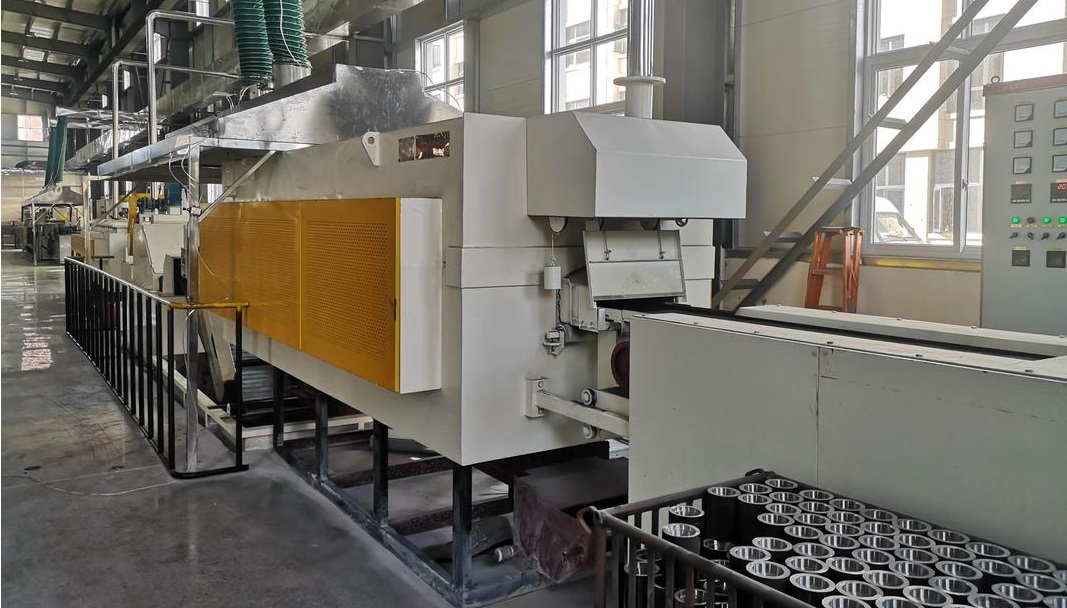
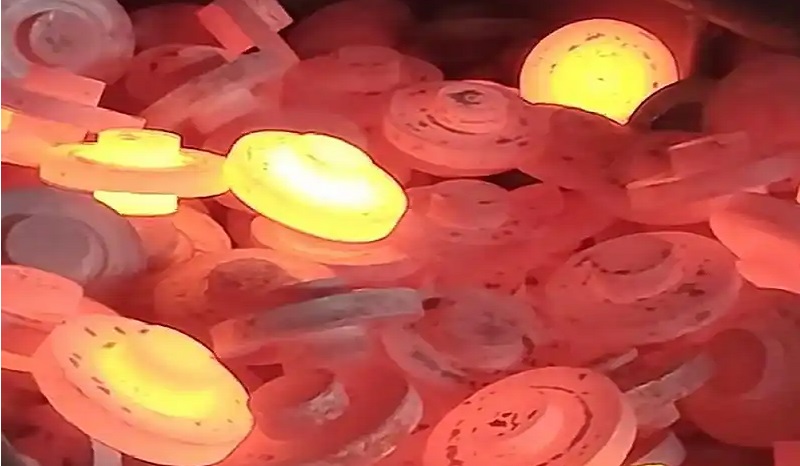
T6 heat treatment is a critical post-casting and post-forging process that fundamentally transforms the mechanical properties of aluminum alloys. Unlike forming processes such as forging, which shape metal through mechanical deformation, T6 modifies the alloy's internal microstructure through a controlled thermal cycle of three steps: solution treatment, quenching and artificial aging. This report analyzes how T6 treatment enhances aluminum fire fitting performance and summarizes its key impacts on material properties.
The performance enhancements from T6 heat treatment arise from two fundamental microstructural changes: spheroidization of eutectic silicon and precipitation hardening.
Spheroidization and Refinement of Silicon Particles: In the as-cast condition, aluminum-silicon alloys such as A356 and AlSi11Mg contain coarse, sharp-edged, needle-like eutectic silicon particles. These irregular shapes act as stress concentrators, making the material brittle and reducing its ductility. During solution treatment (typically 520-540 °C for 6-10 hours), these sharp silicon particles are refined and spheroidized into rounded, globular morphology. This structure significantly improves the alloy's ability to deform plastically without fracturing.
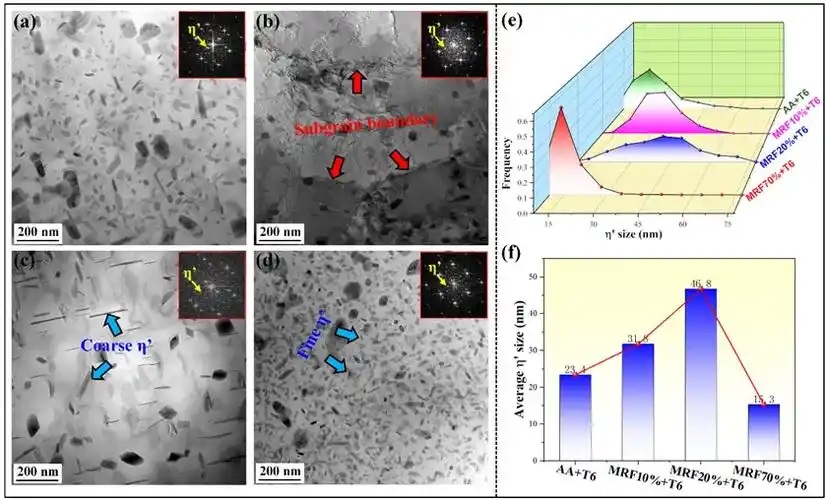
Precipitation Hardening via Mg₂Si Formation: The primary strengthening mechanism in Al-Si-Mg alloys like A356 and 6061 is the formation of magnesium silicide (Mg₂Si) precipitates. During solution treatment, magnesium and silicon atoms dissolve into the aluminum solid solution. Subsequent quenching (typically in water at approximately 20 °C) rapidly cools the alloy, trapping these atoms in a supersaturated solid solution. Finally, artificial aging (typically 130-170 °C for 6-10 hours) triggers controlled precipitation of uniformly distributed nano-scale Mg₂Si particles. These precipitates impede dislocation movement, dramatically increasing material strength and hardness.
The microstructural transformations translate directly into quantifiable performance improvements for fire fittings. The following table summarizes these impacts:
| Property | Impact of T6 Treatment | Quantitative Improvement | Benefit to Fire Fittings |
|---|---|---|---|
| Yield Strength | Significantly increased due to Mg₂Si precipitation hardening | Up to 183% increase with extended aging; 50% increase for AlSi11Mg | Higher resistance to permanent deformation under load; improved structural integrity |
| Tensile Strength | Substantially improved from precipitation strengthening and homogenization | Up to 71% increase with extended aging; 17-52% increase across alloys | Greater load-bearing capacity; enhanced safety margin under high pressure |
| Hardness | Increased due to fine precipitate distribution throughout the matrix | 27-44% increase compared to as-cast condition | Improved wear resistance; better resistance to surface damage |
| Elongation (Ductility) | Optimized with proper parameters; decreases with excessive aging | Up to 56% increase with optimized treatment parameters | Improved toughness and impact resistance when properly optimized |
| Fatigue Strength | Enhanced due to reduced crack initiation sites from spheroidized silicon | Approximately 15% increase for AlSi11Mg alloys | Longer service life under cyclic loading; better durability |
| Impact Toughness | Dramatically improved from spheroidization of brittle silicon particles | Up to 88% increase with optimized T6 treatment | Better resistance to sudden shock loads; reduced catastrophic failure risk |
While T6 treatment provides substantial benefits, several important factors must be considered in actual production:
| Property / Aspect | ACD12 (High Pressure Casting) | A356 (Low Pressure Casting) | 6061-T6 (Forging) |
|---|---|---|---|
| Typical tensile strength | ~230–320 MPa | ~240–310 MPa (after T6) | ~310 MPa (min), typical ~310–345 MPa |
| Yield strength (0.2%) | ~160–220 MPa | ~160–220 MPa (after T6) | ~270–280 MPa |
| Elongation (ductility) | Low: ~1–3% | Moderate: ~5–10% (after T6) | High: ~10–17% |
| Hardness (HB) | ~80–95 HB | ~70–90 HB (after T6) | ~95–105 HB |
| Porosity | Higher (gas or shrinkage porosity common) | Low (controlled filling, less turbulence) | Almost none (wrought structure) |
| Density / internal integrity | Less dense (micro-porosity present) | Near-dense, better than HPDC | Fully dense, no porosity |
| Pressure tightness | Moderate (may leak under high pressure) | Good (suitable for hydraulic/pneumatic) | Excellent (best for high-pressure fluid systems) |
| Machining | Fair (can be abrasive; porosity may cause tool wear) | Good (consistent material) | Excellent (uniform grain structure) |
| Heat treatment possible | Limited (can cause blistering due to trapped gas) | Yes (T6 improves strength & ductility) | Yes (T6 is standard) |
| Cost (tooling & unit) | High tooling, low unit cost (mass production) | Medium tooling, medium unit cost | Low to medium tooling (if simple shapes), higher unit cost |
| Advantages summary | Fast production, complex shapes, good surface finish | Good ductility, pressure tight, heat treatable | Highest strength & ductility, no porosity, excellent fatigue & impact resistance |
In summary, T6 heat treatment enhances aluminum fire fittings through two primary mechanisms: spheroidization of eutectic silicon particles for improved ductility and toughness, and precipitation of Mg₂Si for dramatic increases in strength and hardness. The three-step process transforms the as-cast microstructure into a high-performance engineering material for firefighting applications.
The key impacts are substantially improved yield strength (up to 183% increase), tensile strength (up to 71% increase), hardness (up to 44% increase), and fatigue strength (approximately 15% increase). These benefits come with manageable trade-offs, including residual thermal stresses and potential ductility reduction with excessive aging, which can be addressed through proper parameter optimization.
For high-performance fire department connection fittings, T6 heat treatment is not optional — it is an indispensable production step. Qruck consistently implements effective and compliant T6 heat treatment to ensure maximum reliability in real firefighting scenarios.
We need to carefully choose production processes and heat treatment solutions based on the requirements of different fire-fighting equipment. Especially when the working environment is extremely harsh or the work pressure is relatively high, we should prioritize aluminum fire fittings with standardized T6 heat treatment to ensure operational safety.
Qruck provides full technical support for customers in type choice, product design, production, assembly, maintenance, and sales. Reliable fire fittings are critical for fire department connection. Understanding which fitting and heat treatment solution is appropriate for the job is the first step in selecting the correct fire hose connectors and adapters. Just please contact us to determine which solution is best for your specific application.

Copyright © 2025 Qruck All Rights Reserved. Designed & SEO by followala.cn Sitemap | XML
VIC Grooved Coupling Friendship Cooperation - Submersible Drainage Pump | Slurry Pump | High Head Dewatering Pump | Encapsulated Motor | Water Cooled Motor |
 Languages