 Languages
Aluminum HPDC Limits for Fire Storz Couplings - Qruck
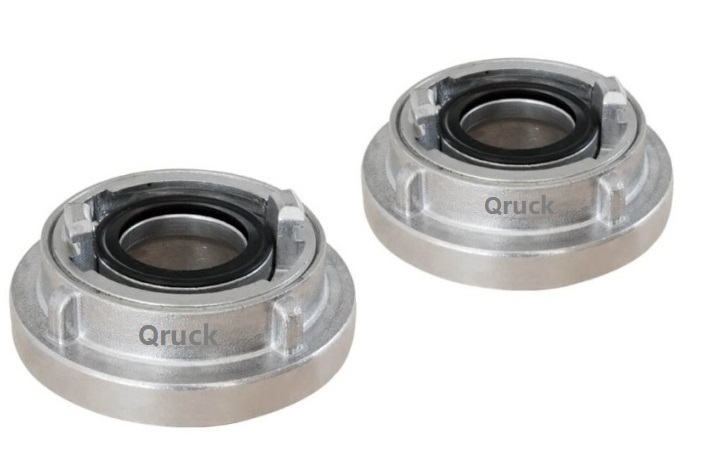
Why HPDC is being phased out for Fire Hose & Fire Pump Storz Coupling — porosity, cold flakes, blistering, and T6 barriers.
In the firefighting field, Aluminum high-pressure die-casting production process is being phased out.
Qruck high-pressure die-casting production process for aluminum alloys is widely used in fire-fighting low-pressure connections, municipal drainage, landscape irrigation, and agricultural irrigation due to its dimensional accuracy, light weight, and low cost.
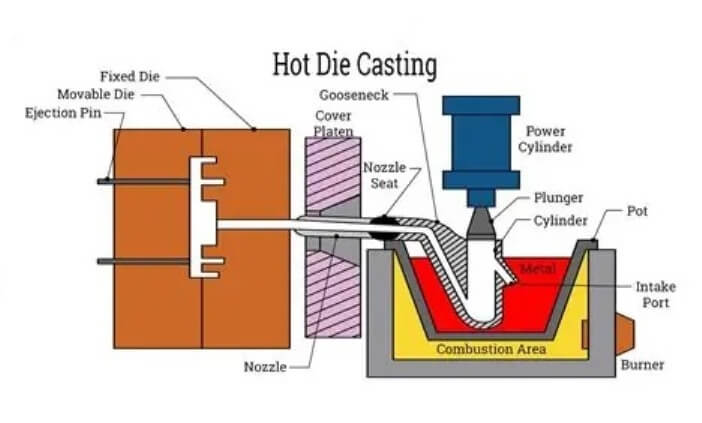
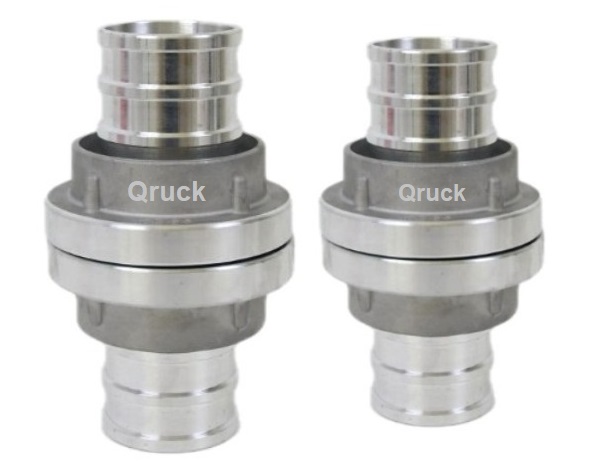
Common high-pressure die-casting aluminum alloys mainly fall into two major systems: Al-Si-Cu and Al-Si-Mg, among which ADC12/A380 is the most widely used general-purpose grade for Fire Hose Storz Coupling and Fire Pump Storz Coupling .
ADC12 / A383 / YL113
The most common die-casting aluminum alloy, corresponding to the European standard EN AC-46000 (AlSi9Cu3). It offers good castability and machinability at low cost, and is widely used for motor housings, controllers, and general structural parts. Its theoretical tensile strength is approximately 240 MPa.
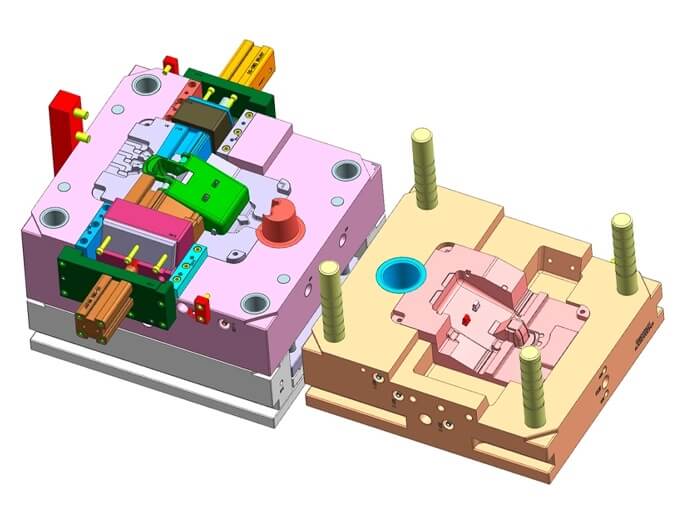
A380 / EN AC-46000
Similar in performance to ADC12 but with a higher copper content, it provides better mechanical properties (tensile strength of approximately 320 MPa) and hardness. It is commonly used for load-bearing components such as engine brackets and transmission housings, and is a representative grade in American standards.
AlSi12(Fe) / EN AC-44300 & A360 / AlSi10Mg(Fe)
- AlSi12(Fe) / EN AC-44300: With a relatively high silicon content and good fluidity, it is suitable for thin-walled, complex heat-dissipation housings, and also offers good corrosion resistance.
- A360 / AlSi10Mg(Fe): Belonging to the Al-Si-Mg system, it offers better corrosion resistance and fluidity than ADC12, making it suitable for thin-walled parts with relatively high corrosion-resistance requirements.
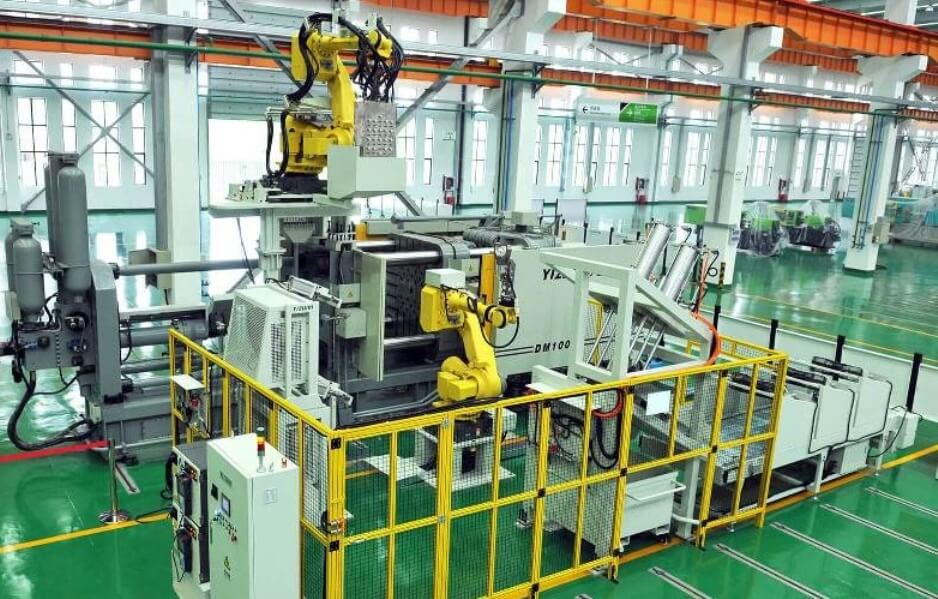
Core limitations of aluminum HPDC for Storz Couplings
Meanwhile, the main shortcomings of the aluminum alloy high-pressure die-casting (HPDC) process are concentrated in two aspects: internal defects that are difficult to eliminate and difficulties in process quality control. These limitations directly affect the mechanical properties and reliability of the castings for Fire Hose Storz Coupling and Fire Pump Storz Coupling .
Internal defects: porosity and oxide films
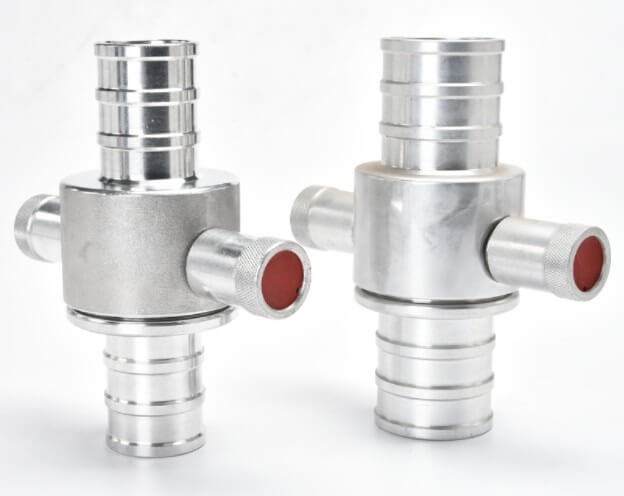
This is the most fundamental limitation of HPDC. High-speed filling causes the melt to entrain air, forming gas porosity (typical porosity of about 2%–5%). More critically, the current research consensus holds that "hydrogen is not the main problem; air entrapment and oxide films are," and the formation of oxide films is mainly governed by melt treatment and the filling process. These defects significantly reduce the material's mechanical properties, fatigue life, and crash safety.
Structural defects: externally solidified crystals
Externally solidified crystals (ESCs) formed in the shot sleeve are carried into the die cavity. Among them, Type II ESCs (commonly known as "cold flakes") have a clear boundary with the matrix and act as crack initiation sites, potentially reducing elongation to about 1%. Increasing the melt temperature or reducing the fast shot velocity can reduce their formation, but it is difficult to eliminate them completely.
Why can’t T6 heat treatment improve HPDC Storz Coupling?
Porosity expands at high temperatures, causing "blistering."
Mechanism of blistering
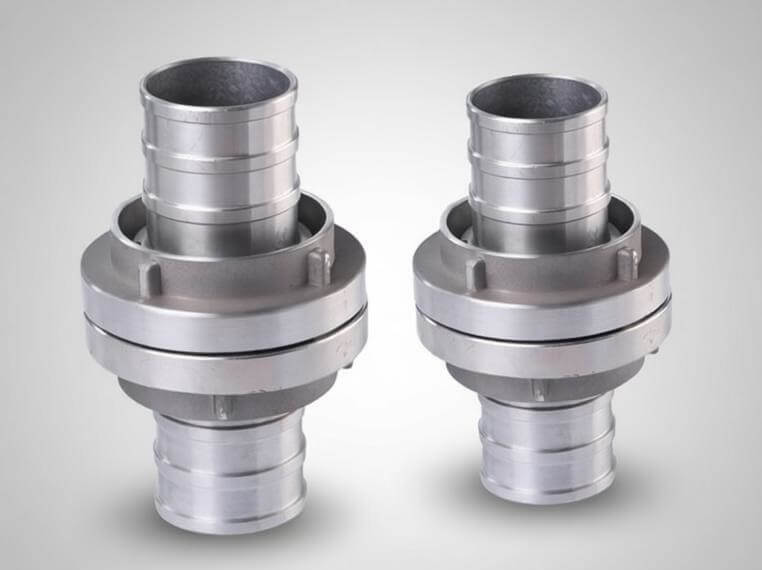
During the high-pressure die-casting process, the melt entrains air and gases generated by the decomposition of the release agent during high-speed filling. These gases are "sealed" inside the casting under high pressure, forming gas porosity. The first step of T6 heat treatment is high-temperature solution treatment (typically above 500°C and lasting several hours). At this point, the aluminum matrix softens significantly, and the compressed gas inside the porosity sharply increases in pressure when heated, pushing outward and forming bulges on the casting surface, known as "blistering." Research clearly indicates that the amount of porosity increases with both solution treatment temperature and time, and the effect of temperature is greater than that of time.
Blistering directly damages performance and appearance
Blistering not only causes appearance rejection but also severely damages mechanical properties. The expansion of pores enlarges internal defects and creates crack initiation sites, which instead reduces the strength and toughness of the casting. Therefore, ordinary die-cast parts can generally only undergo T5 (stress-relief) treatment and cannot achieve significant strengthening through T6.
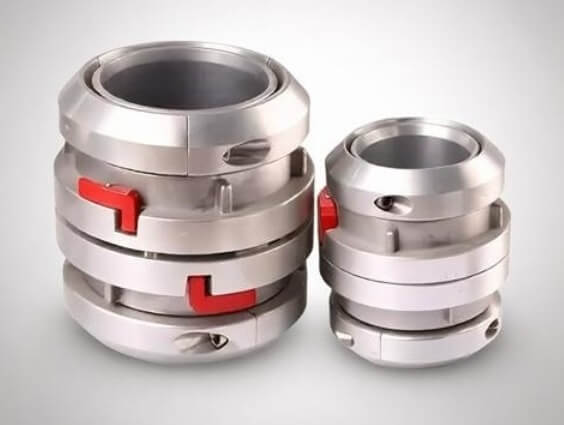
Conclusion: Therefore, in the fire-fighting field, the aluminum alloy high-pressure die-casting production process has significant limitations. When we have higher requirements for working pressure, drop resistance, and service life, we should choose the low-pressure die-casting production process or the heavy forging production process for Fire Hose Storz Coupling and Fire Pump Storz Coupling.
FAQ: Aluminum HPDC, Storz Couplings & Safety Clothing Fabric
HPDC introduces gas porosity, oxide films, and cold flakes that reduce mechanical properties and fatigue life. T6 strengthening is impossible due to blistering. For high drop resistance and pressure, low-pressure die casting or heavy forging is preferred.
Internal gas porosity (2–5%), oxide films, and externally solidified crystals (cold flakes) which act as crack initiators. These defects lower elongation and crash safety.
No. High-temperature solution treatment causes entrapped gas to expand, leading to surface blistering. Blistering enlarges defects and degrades strength, so only T5 stress relief is viable.
Safety Clothing fabric (e.g., aramid, FR cotton) is critical for firefighter turnout gear, but Storz couplings must also meet stringent mechanical reliability. HPDC limitations highlight the need for robust processes, mirroring the safety demands of protective fabrics.
Common alloys: ADC12 (~240 MPa), A380 (~320 MPa), AlSi12(Fe) and A360 for corrosion resistance. However, HPDC process defects can reduce actual performance below theoretical values.